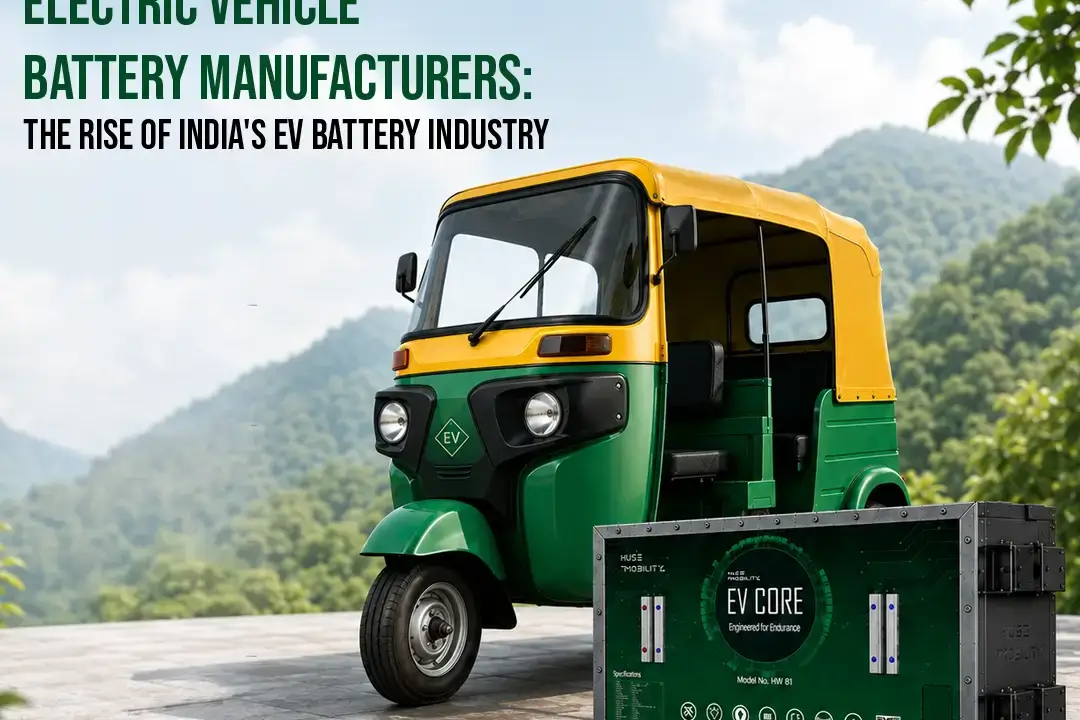

The Rapid Growth of Electric Vehicle Battery Manufacturers in India
Electric mobility in India is witnessing an accelerated growth trajectory, providing a plethora of opportunities to the EV battery manufacturing companies in India. The need for efficient and high-end battery systems due to the rapid electrification of India’s transport network provides an excellent opportunity for manufacturers.
Being the soul of any electric mobility system, batteries play a crucial role in defining vehicle performance, efficiency, and cost. Under the favorable conditions in India, it is rapidly emerging as an ideal industry ready to manufacture next-generation energy systems and electric vehicles.
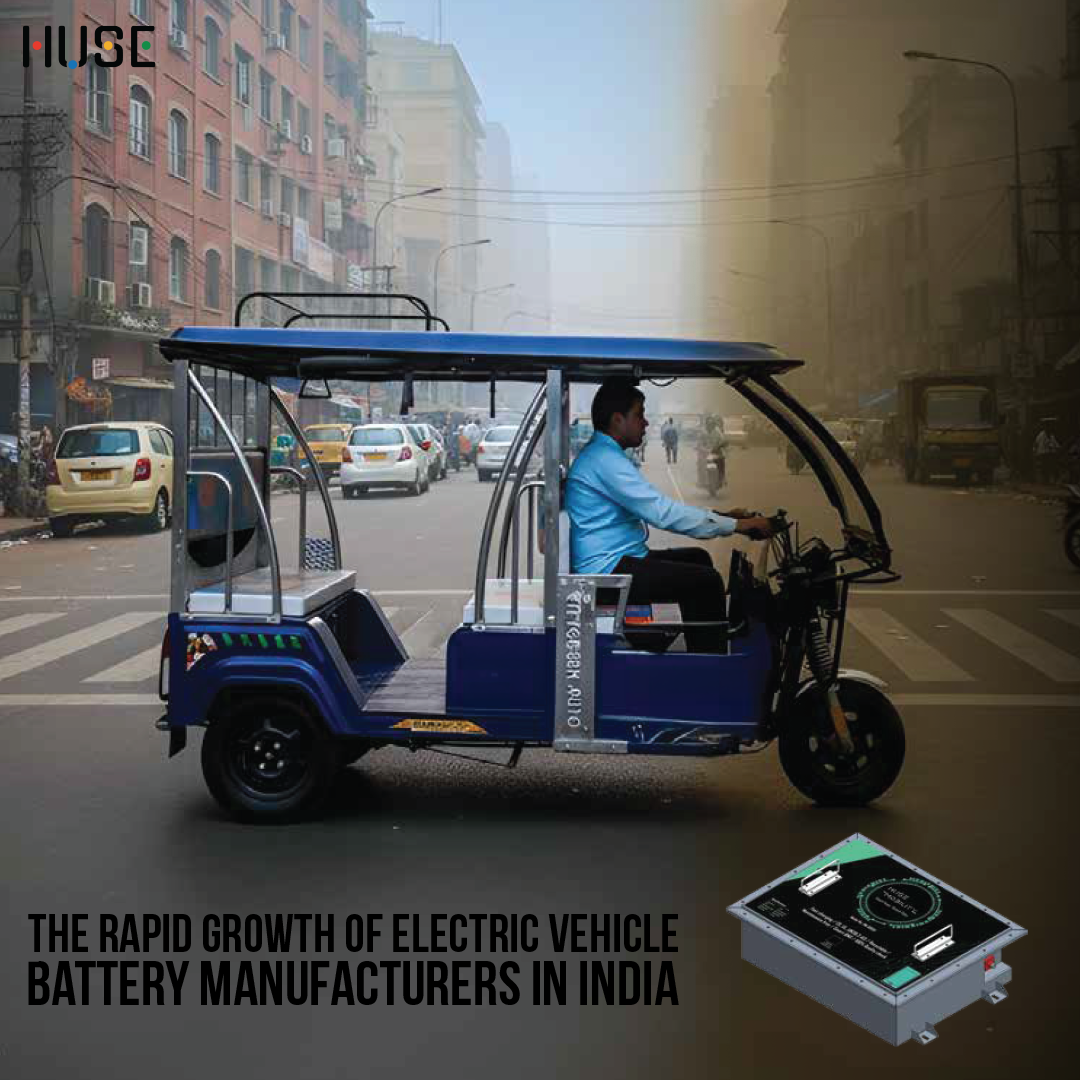
Reasons Behind the Fast-Growing EV Battery Manufacturing Industry in India
The industry of electric vehicles in India has been undergoing rapid changes. Therefore, the manufacturing of batteries has been identified as one of the most promising areas. The increasing demand for electric vehicles, the availability of favorable government policies, and localization efforts are fueling the growth of this industry.
● Favorable Government Policies
The Indian government has played an important role in making EV battery manufacturing in India profitable. FAME II and PLI initiatives have certainly played a role in ensuring the swift development of local facilities. It helps manufacturers to produce their batteries locally without having to import any of these components.
● Increasing Demand for Electric Vehicles
With the increased use and popularity of EV two-wheelers, passenger vehicles, and commercial electric vehicles, there is a consequent rise in demand for batteries for electric vehicles. This is because people want to switch from traditional means of transportation to environmentally friendly options.
● Localization of Supply Chains
There has been an effort by the Indian manufacturers to localize battery production. This process of localization not only helps strengthen the supply chain but also helps in lowering the costs of production. This is bound to result in cost-efficiency and sustainability in manufacturing in the future.
Technological Innovations Behind EV Batteries in India
The development of the EV battery sector in India has been driven by many technological innovations. Manufacturers keep on investing in more powerful batteries and safety systems to make the EVs a perfect replacement for traditional vehicles.
● Domination of Lithium-Ion Battery
Lithium-ion batteries have come to dominate the EV battery industry because of the advantages offered by these batteries. They offer energy density, efficiency, superior performance, increased life cycles, and fast charging. Hence, the EV battery manufacturing in India is dominated by lithium-ion batteries.
● Battery Management System
The advancement in battery management systems technology has helped to increase the performance of batteries and improve their safety and thermal stability. BMS monitors voltage, temperature, and the charging cycle of the batteries for electric vehicles.
● Fast Charging and Thermal Innovations
Consumers in the modern day seek faster charging speeds and enhanced durability of batteries. The innovations by manufacturers in the field of thermal management help in avoiding overheating and enhancing the life of batteries. Such advancements are helping manufacturers in India to compete against the global brands of electric vehicles.
Leading Electric Vehicle Battery Manufacturers in India
Today, India is home to a variety of manufacturers that range from legacy power brands to tech-savvy newcomers in the electric battery space. Together, these brands are shaping the country’s gradual shift towards sustainable mobility, especially during the global turmoil for crude oil.
Legacy Industry Players
Exide Industries, Amara Raja, and Tata AutoComp are some of the key players contributing to the growth of EVs by offering batteries for such cars. These brands have established their infrastructure in such a way that helps them dominate in their domain due to their large-scale production capacity. They have been the pioneers in laying down a base of electric vehicle batteries in India.
Emerging Player in the EV Battery Market
Huse Mobility is making a mark in the EV battery industry in India as an innovative player providing high-tech lithium-ion batteries that cater to the power and speed that EVs need today. The company is creating future-oriented battery systems with an emphasis on performance and safety. This technologically-driven company will surely play a significant role in the evolving EV ecosystem in India.
Benefits of Domestic EV Battery Manufacturing
The domestic manufacturing of EV batteries is now quite beneficial and profitable as sales are growing amidst the global crude oil crisis. The domestic manufacturing of EV batteries is improving industrial capacity, making electric mobility affordable in the following ways;
● Import Dependency Reduction
By manufacturing batteries locally, there will be less dependency on imported batteries and battery components. There will be more stability in the supply chain, and it will make the country less vulnerable to external market fluctuations.
● Reduction in Manufacturing Costs
Manufacturing of components domestically can help save on logistics costs as well as import duties, which makes EV manufacturing cheaper. Reduced battery costs lead to reduced vehicle costs, making them more affordable and popular in India.
● Industry and Economic Development
An increase in the production of batteries facilitates the generation of jobs as well as the development of infrastructure and innovations. In addition, it attracts investments in the electric mobility value chain.
Issues Faced by EV Battery Manufacturers in India
Despite rapid growth, there are quite a few issues that the EV battery manufacturing companies in India have been facing. Some structural and technological problems are yet to be solved.
● Constraints in Raw Materials
India relies on imports to source lithium, cobalt, and nickel. Such reliance poses both supply risk and financial pressure to the companies. Finding alternative sources for batteries is the key.
● Capital Intensive Investments
A battery manufacturing plant requires heavy capital investments from companies to set up the infrastructure and conduct research work. It poses an obstacle to new manufacturers.
● Scaling of Technology
Scaling up the manufacturing process to facilitate large production is quite difficult. Manufacturers need constant investments to upgrade the battery capacity of the EVs.
Irrespective of the challenges, the EV battery manufacturing companies in India are all set to witness growth. With the help of new battery developments, like LFP and sodium-ion battery cells, along with smart new manufacturers, the Indian EV market will gain strength in the global value chain.
Conclusion
With the evolution of electric mobility in India, there are a lot of opportunities for technological advancement in terms of battery production. There will be many more contributions in the future with increased demand for electric mobility in India. So, partner with Huse Mobility for state-of-the-art battery technology for EVs.